Manual Clinical and Administrative Work
Staff reenter information, move documents, track work in spreadsheets, and repeat steps because the current system does not support the full process.

Healthcare technology should support the clinical and operational work already taking place. MedCode® helps organizations close workflow, reporting, communication, and information gaps with custom software, integration, automation, reporting, databases, and practical consulting.
Because every environment is different, the work starts with the people and process. Then we determine how EMR, EHR, HL7, FHIR, SQL, reporting, portals, or other technology can support the workflow without creating unnecessary disruption.
Healthcare teams often depend on capable systems that still leave important gaps in workflow, reporting, communication, and access to information.
Staff reenter information, move documents, track work in spreadsheets, and repeat steps because the current system does not support the full process.

Clinical, billing, laboratory, referral, imaging, device, and third party systems do not exchange information reliably or clearly.
The data exists, but standard reports cannot answer operational, clinical, financial, quality, or compliance questions.
Referrals, authorizations, documents, outreach, care gaps, alerts, and follow up depend on staff remembering the next step.
MedCode® brings custom software, integration, reporting, automation, database expertise, and consulting together around the real workflow.
Every organization is different, but these examples reflect the types of healthcare challenges MedCode® can address.
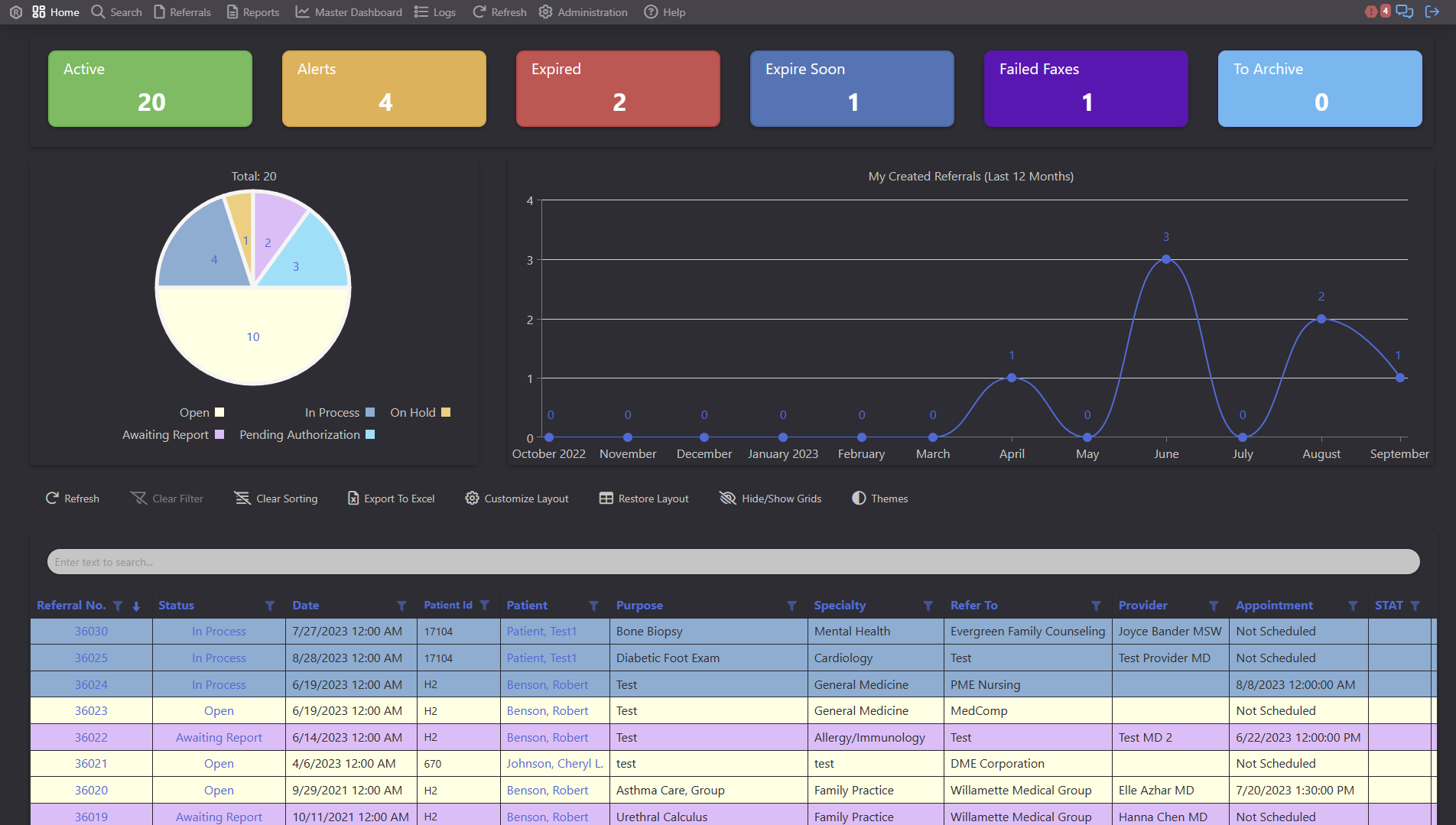
01Track status, documents, signatures, follow up, communication, exceptions, and accountability across the referral process.
02Produce the reports, calculations, dashboards, and scheduled output that standard system reporting does not provide.
03Classify, route, index, validate, compare, and reconcile documents and data with human review where it matters.

04Identify gaps, organize outreach, monitor completion, and create visibility around preventative and follow up workflows.

05Move orders, results, measurements, statuses, and other information between supported clinical systems and equipment.

map, validate, move, reconcile, and preserve clinical and business data during system changes or legacy modernization.
The forms you created are top notch, and our reporting department says they would be lost without your custom reports.
Operations Manager, Healthcare Organization, Lubbock, Texas

Explore healthcare interoperability, HL7, FHIR, APIs, direct database connections, interfaces, monitoring, and reconciliation.
Explore Healthcare Integration ↗
Review Referral Dashboard®, nSight Reports, Preventative Management, and AthenaPractice or AthenaFlow workflow tools.
View Products ↗
See real examples involving custom reports, forms, referral workflows, automation, and healthcare integrations.
View Client Experiences ↗
Explore the technology, automation, reporting, integration, data, and consulting capabilities that can support the work.
Explore Solutions ↗Often, yes. The available options depend on the system, version, vendor access, APIs, interface capabilities, database access, security requirements, and the workflow involved. MedCode® begins by reviewing the actual environment.
No. Many projects extend, connect, automate, or report from the systems already in place. Replacement is considered only when it is the more practical path.
Yes. The work can include software, interfaces, databases, reporting, document processing, workflow analysis, implementation, training, and ongoing support.
Describe where staff are losing time, where information is disconnected, or what the current EMR, reporting, integration, or application environment cannot support. MedCode® can bring the right combination of software, interoperability, data, automation, and consulting to the problem.